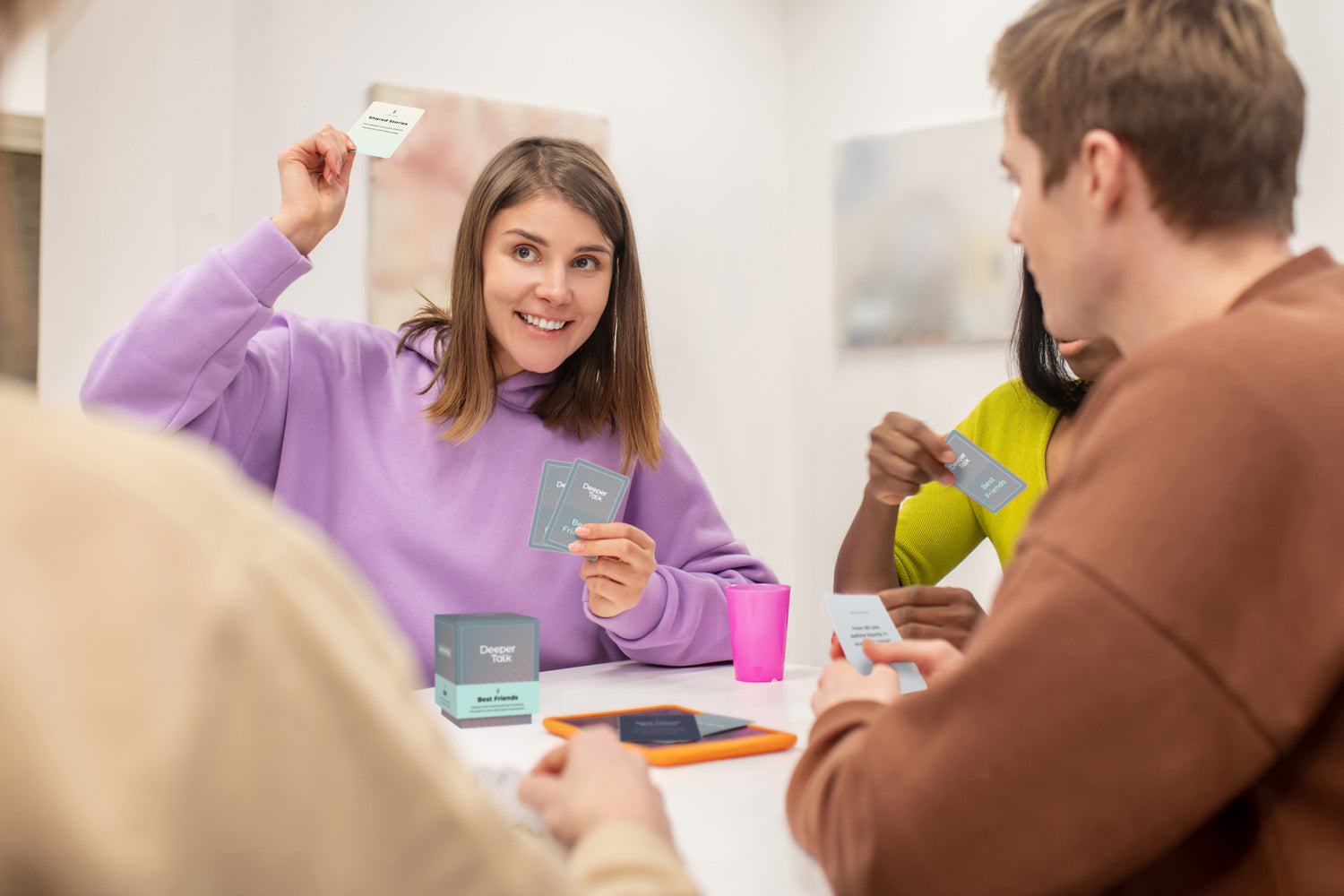

You're halfway through dinner and the conversation has drifted to logistics. Who's picking up the dry cleaning. Whether the weekend is booked. A comfortable silence settles in — but it doesn't feel comfortable. It feels like you've both run out of things to say, and neither of you knows how to say that out loud.
That's the exact moment conversation cards were designed for. Not because relationships are broken. But because depth doesn't always come naturally — it needs a little structure.
If you're searching for the best conversation cards for couples, here's what you actually need to know before you buy.
The best conversation cards for couples aren't just a list of random questions — they're structured, emotionally safe, and designed to create real conversation. This guide breaks down what makes them work, which types suit different couple situations, and how to choose the right one for you.
What Makes Conversation Cards Actually Work?
Most conversation card products have the same problem: they go from "what's your favourite colour" to "what's your deepest fear" with nothing in between. That tonal whiplash is exactly why some couples try them once and never again.
What works is progressive depth — starting in familiar, low-stakes territory and moving gradually into more meaningful conversation. It's the same principle that makes therapy effective: safety before vulnerability.
Research from the Gottman Institute consistently shows that emotional attunement — the sense that your partner truly sees and understands you — is one of the strongest predictors of long-term relationship satisfaction. Conversation cards that are designed well create the conditions for exactly that. Ones that aren't designed well just create awkward silences.
When you're choosing couples conversation cards, look for:
-
A clear structure — not just a pile of random prompts
-
Graduated depth — light to meaningful, not shock-and-awe
-
Activities as well as questions — talking is one part; shared experience deepens it
-
Psychological backing — does anyone with actual expertise stand behind this?
Best Conversation Cards for Couples: By Situation
For Married Couples Who Feel Like Roommates
This is the most common search pattern, and it's worth saying plainly: if you and your partner feel more like housemates than romantic partners, you're not alone, and you're not broken. Life compresses. Routines take over. The conversations that used to happen naturally now require a little more intention.
Conversation cards for married couples work best when they bypass the day-to-day entirely. Skip the "how was your day" layer and go somewhere new. The best decks for this context include questions that revisit why you chose each other, what you're still learning about each other, and where you want to go next — not just logistically, but emotionally.
DeeperTalk's Soulmates Game was built for this. It uses six progressive depth levels, starting with warmth and familiarity before moving into genuine emotional territory. Couples who've been together for years often say the Level 4 and 5 questions hit differently than anything they expected — because they'd never thought to ask.
For Long-Distance Couples
Long-distance relationships carry a particular weight. You're maintaining intimacy without the easy shorthand of physical presence — no shared glances, no casual touches, no spontaneous couch conversations. Every interaction has to do more work.
Conversation cards for long-distance couples are best used on scheduled video calls — treat it like a date, not a check-in. Choose a deck that moves beyond surface-level catch-up and into what you're actually thinking and feeling. The right questions don't just fill time; they build a sense of being genuinely known across the distance.
Digital-format decks are a natural fit here — no waiting for shipping, no lost cards. You can both pull up the same prompt at the same time and respond to it together. DeeperTalk's digital format means you can access your questions from any device, making it ideal for couples in different cities or countries.
Some prompts that tend to land well in LDR contexts:
-
What's something you've been thinking about lately that you haven't had the chance to say?
-
When you imagine us in the same city, what's the first thing you picture doing?
-
What's something about me you're learning more about from a distance?
For Newlyweds
Newlyweds often assume they've already done the deep-conversation work — during dating, during engagement, during the wedding planning process. But marriage shifts something. The stakes feel different. The long-term becomes real.
Conversation cards for newlyweds work beautifully as part of a deliberate "getting to know each other as spouses" ritual — something you do weekly or monthly, separate from date night logistics. The best prompts for this stage explore values, life visions, family expectations, and what you each need to feel loved and understood over the long haul.
If you're recently married and looking for a meaningful post-wedding ritual together, this is one of the most underrated options. It's also one of the most thoughtful wedding gifts you can give another couple.
For Boyfriend and Girlfriend (Dating Couples)
Dating couples — especially those past the honeymoon stage but before major life commitments — often sit in an interesting middle zone. The initial rush has settled, the comfort is real, but the depth of conversation hasn't quite caught up.
Conversation cards for boyfriend and girlfriend tend to work best when they balance playfulness with genuine curiosity. You don't need to go full deep-dive every time — but you do need to go somewhere beyond "what do you want to watch tonight."
Look for decks that include a mix of:
-
Fun, low-stakes questions to keep the energy light
-
Curious questions that reveal character and values
-
Deeper prompts you can dip into when the mood is right
The Level 1 and 2 prompts in DeeperTalk's couples range are perfect for this stage — they're genuinely engaging without feeling like a therapy session.
How to Use Conversation Cards Without It Feeling Forced
The most common reason conversation cards get abandoned after one use: it felt awkward.
Here's how to make it feel natural:
-
Set a low-stakes context. Over dinner, on a walk, during a long drive — not at a formal "we're doing this now" moment
-
Both people draw a card — share the power, don't put one person in the hot seat
-
Start with Level 1. Even if you're a long-term couple. The warmth builds quickly
-
There are no wrong answers. The point is conversation, not performance
-
Let tangents happen. If a question sparks a thirty-minute discussion, that's the win
-
Make it a ritual, not a one-off. Weekly or bi-weekly use creates momentum and depth over time
Why DeeperTalk Is Different From Generic Card Games
Most conversation card games are designed to entertain. DeeperTalk was designed to connect — and there's a meaningful difference.
The Soulmates Game was co-created with over 100 qualified psychologists, relationship coaches, and clinical therapists. Every question and activity is psychologically and emotionally safe by design. The progressive Level 1–6 structure ensures couples aren't thrown into raw emotional territory before they're ready.
It also includes activities, not just questions. That matters. Shared action — doing something together, not just answering a prompt — creates a different quality of connection. It's the difference between talking about vulnerability and practising it together.
If you've tried generic card games before and they fell flat, this is worth a different kind of attention.
Use code FIRST15 for 15% off your first order at deepertalk.com.
Key Takeaways
-
The best conversation cards for couples use progressive depth — not random questions at random intensity
-
Different couple situations need different things: LDR couples benefit from digital formats; newlyweds need vision-building prompts; married couples need questions that bypass the day-to-day
-
Activities alongside questions make the experience more memorable and connective
-
Psychological backing and intentional structure separate useful decks from novelty ones
-
Consistency matters more than intensity — use them regularly, not just once
FAQ
Q: What are the best conversation cards for couples?
The best conversation cards for couples are those with a structured, progressive format — starting light and building to deeper emotional territory. DeeperTalk's Soulmates Game is designed exactly this way, co-created with psychologists and built to create genuine intimacy rather than surface-level chat.
Q: Do conversation cards actually help couples connect?
Yes — when they're designed well. Research shows that emotional attunement and self-disclosure are key to relationship satisfaction. Conversation cards that are structured and emotionally safe create the conditions for both. Randomly shuffled questions without context tend to fall flat.
Q: What are good conversation cards for long-distance couples?
Digital-format conversation card decks work best for long-distance couples — accessible on any device, perfect for video calls. Look for prompts that go deeper than daily check-ins and build a sense of being truly known across the distance.
Q: Are conversation cards a good wedding or anniversary gift?
Yes — they're one of the most thoughtful and genuinely useful gifts for couples. They work for newlyweds building shared rituals and for long-term couples who want to reconnect. DeeperTalk decks come in digital format, making them ideal for immediate gifting.
Q: How often should couples use conversation cards?
Weekly or bi-weekly use tends to create the most meaningful results. Like any relationship habit, consistency matters more than intensity. Even 20–30 minutes once a week makes a measurable difference over time.
Q: What makes DeeperTalk different from other conversation card games?
DeeperTalk was co-created with 100+ psychologists and therapists, uses a six-level progressive depth system, and includes activities alongside questions. Most other card games are designed for entertainment — DeeperTalk is designed for genuine emotional connection.
Ready to Go Deeper?
The Soulmates Game is built for couples who want real conversation — not just more talking. Explore the full couples range at Couples collections and find the deck that fits where you are right now.